Let’s be honest: dogs are adorable, but they’re also tiny (or not-so-tiny) emotional creatures with teeth. And while most of us like to believe our dog “would never hurt anyone,” the truth is every dog has a limit. Even the sweetest furball can turn into a threatening animal if scared, confused, or pushed too far.
Preventing aggression in dogs isn’t just about training — it’s about understanding what’s going on inside that cute furry head. The good news? With the right steps, you can reduce the chances of aggressive behavior and help your dog feel safer, calmer, and a whole lot less dramatic.
First: Understand Why Dogs Become Aggressive
Dogs don’t just wake up and decide to act mad. There is a reason for everything they do and the aggression usually is related to:
- Fear
- Pain
- Anxiety
- Lack of socialization
- Confusion
- Overprotectiveness
- Past trauma
- Overstimulation
- Resource guarding
- Or simply being fed up with life (we’ve all been there)
Once you understand the cause, prevention gets a whole lot easier.
1. Socialize Early — But Don’t Treat Your Puppy Like a Party Animal
Socializing your dog early is one of the most effective ways to prevent aggression. A well-socialized dog has seen the world, sniffed the world, and realized that the world isn’t out to destroy them.
Good socialization includes:
- Meeting friendly people and well-mannered dogs
- Hearing normal noises without panicking
- Experiencing new environments
- Getting used to being handled
But here’s the important part — socialization has to come with patience not exposing them to every human interaction that comes their way.
Slow and steady works best in letting them become more comfortable with you. Moving at a faster pace too quickly can backfire and create fear instead of trust.
2. Positive Reinforcement Training: Because Yelling Never Helped Anyone Learn Anything
Positive reinforcement is essentially telling your dog, “Yes, sweet child, THAT is exactly what I wanted,” instead of yelling when they do something wrong.
Dogs are like a small child, they can sense the tension early one. They learn best with rewards — treats, praise, toys, belly rubs and they don’t learn well from fear, intimidation, or lectures about “disappointing the family.”
When you use positive reinforcement:
- Trust grows
- Confidence builds
- Aggression decreases
- Your dog decides you’re worth listening to
Punishment, on the other hand, teaches dogs to hide their fear. And a scared dog that suppresses their warnings? That’s a dog who goes straight from stressed to snapping, which equals scary. No thank you.
3. Teach Bite Inhibition (A.K.A. “Please Don’t Use My Hand as a Chew Toy”)
Puppies bite. A lot. On purpose. On accident. On everything. It’s normal — it’s how they explore the world.
But they need to learn how to control the strength of their bite. If they don’t learn as puppies, they definitely won’t magically learn as adults.
Teach them gently through:
- Redirection to toys
- Stopping play when biting gets too hard
- Rewarding soft mouth behavior
A dog who learns bite inhibition young is far less likely to react aggressively later.
4. Learn the Early Warning Signs — Because Dogs Don’t Speak English
One of the biggest reasons aggression “seems sudden” is because people miss the warning signs.
Dogs always communicate before escalating. Always.
Signs include:
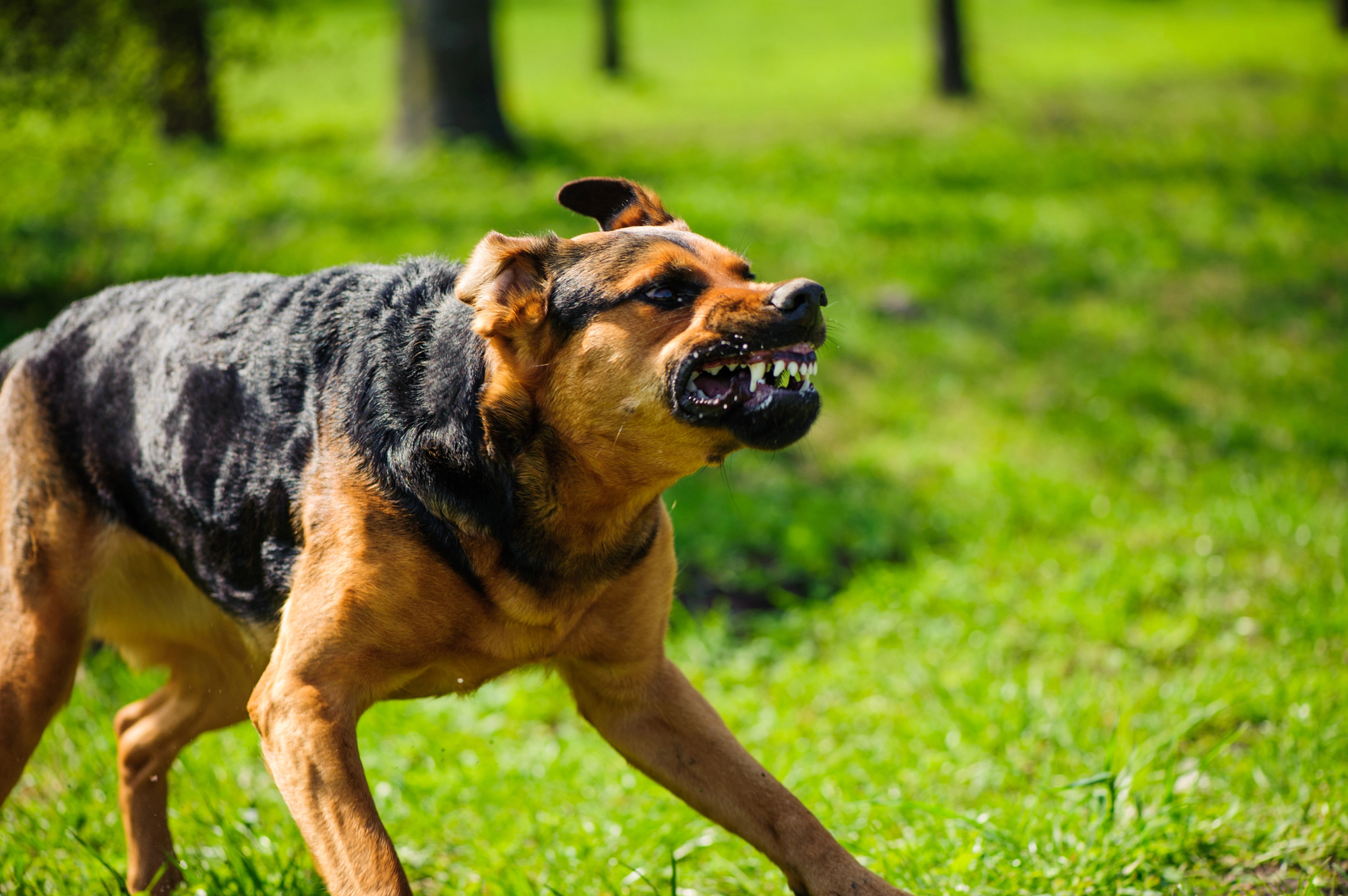
- Stiff body
- Hard stare
- Whale eye
- Lip lifting
- Low growling
- Hiding
- Avoiding touch
- Freezing
This is your dog politely saying, “I’m uncomfortable. Please stop.”
If ignored, well… the politeness ends.
5. Establish Boundaries — Your Dog Shouldn’t Be Running the Household
Dogs thrive on structure. When they know what’s allowed and what’s not, they feel safe. When they don’t know the rules, they improvise — usually in ways you won’t appreciate.
Healthy boundaries may include:
- Not rushing the door
- Sitting before getting food
- Practicing calm behavior around other dogs
- Learning to “leave it” and “drop it”
- Understanding personal space
Boundaries prevent confusion, and confusion is one of the biggest sources of stress-related aggression.
6. Keep Play Fun — Not Rough, Overstimulating Chaos
Look, we all love a good game of fetch, tug-of-war, or chase-the-sock-the-dog-wasn’t-supposed-to-take. But rough or chaotic play can quickly turn into overstimulation, and overstimulation can lead to snapping.
Signs play is getting too intense:
- Your dog stops listening
- The body becomes stiff
- Growling shifts from playful to annoyed
- Teeth appear a little too often
Pause the game.
Let your dog decompress.
Then resume when they’ve remembered how to act civilized.
7. Address Fears Head-On (But Gently)
Fear is one of the top causes of aggression. A dog that feels trapped or threatened will do whatever they think will get the scary thing to go away — and that includes growling or snapping.
To prevent fear-based aggression:
- Identify what scares your dog
- Introduce the scary thing slowly
- Pair it with treats and positive experiences
- Never force them into situations they clearly hate
Slow exposure builds confidence. Forced exposure builds fear — and fear is not the vibe.
8. Prevent Resource Guarding Before It Begins
Many dogs naturally guard things that matter to them — toys, beds, food, your favorite socks… you know, the essentials.
While normal in dog culture, guarding can escalate into snapping if not addressed early.
Prevent guarding by:
- Hand-feeding occasionally
- Teaching “trade” with high-value treats
- Avoiding snatching items out of their mouth
- Rewarding calm behavior around food or toys
Your dog should learn that humans approaching their stuff = good things, not theft.
9. Provide Physical and Mental Stimulation — A Bored Dog Is a Problem Waiting to Happen
A tired dog is a peaceful dog. A bored dog is… well, the reason your shoes mysteriously disappeared and why they’re suddenly barking at the wind.
Make sure your dog gets:
- Exercise
- Walks
- Puzzle toys
- Enrichment games
- Training sessions
Mentally and physically stimulated dogs have far less pent-up frustration — which means far fewer aggressive reactions.
10. Rule Out Medical Issues — Pain Can Make Anyone Grumpy
If aggression appears “out of nowhere,” always consider the possibility of pain or illness. Dogs can’t say, “Hey, my back hurts,” so they may growl, hide, refuse touch, or snap when handled.
A vet check can uncover:
- Pain
- Allergies
- Infections
- Arthritis
- Thyroid issues
- Vision or hearing loss
Treating the underlying problem often solves the behavior.
11. Don’t Be Afraid to Call a Professional
You can’t DIY everything — especially behavioral issues that could become dangerous.
A certified trainer or behaviorist can identify triggers you might not notice and create a customized plan for your dog. Early help prevents problems from spiraling into something more serious.
Seeking help isn’t a failure — it’s smart, responsible dog parenting.
Final Thoughts
Preventing aggression in dogs is really about understanding what your dog needs emotionally, mentally, and physically. When you build trust, set expectations, reward calm behavior, socialize early, and stay aware of stress signals, you’re giving your dog every chance to be a peaceful, confident companion.
Aggression isn’t a personality flaw — it’s communication. And when you listen to what your dog is trying to tell you, you can stop problems before they start.
A calm dog isn’t a lucky dog — it’s a supported one. And with the right balance of structure, love, humor, and patience, you and your furry friend can live together in harmony… with as little growling as possible.